November 19, 2026
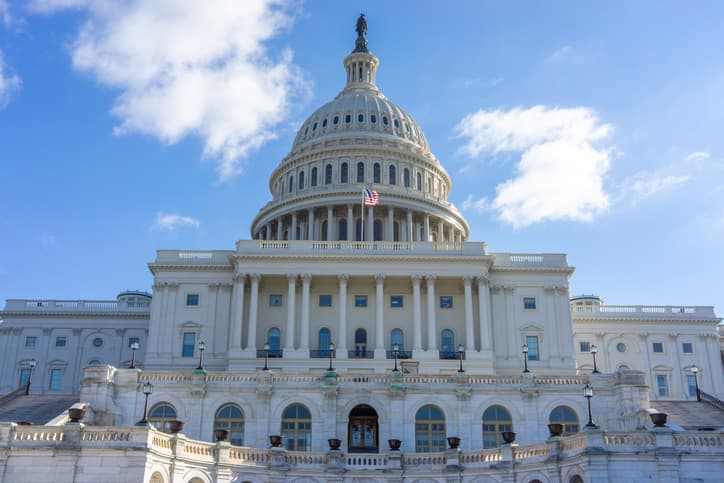
On November 16, 2026, U.S. Senators Katie Britt (R-Ala.), Richard Blumenthal (D-Conn.), and Cory Booker (D-N.J.) introduced the Ending Forced Arbitration of Children Online Act. The bill would give families the right to go to court when a child is harmed by an online platform, instead of being forced into private arbitration by the fine print in a terms of service agreement.
The bill comes as Roblox, Discord, and other companies are trying to push children’s lawsuits into arbitration. Gibbs Mura represents families in the Roblox Child Sexual Exploitation and Assault Litigation, the Roblox Illegal Child Gambling Lawsuit, and more than 500 families in social media addiction lawsuits.
What Is the Ending Forced Arbitration of Children Online Act?
Many apps and games force users to agree to arbitrate disputes and give up their right to participate in a class action just to use their apps, even when the user is a child. Those terms can force families into a closed-door process, even when a child has been seriously hurt.
The bill would change that. If a child is harmed while using an online platform, the person bringing the claim could choose to go to court. Any arbitration agreement or class action waiver signed before the harm happened would not be enforceable.
The bill would:
- Cover the apps kids use. That includes online platforms, video games, messaging apps, streaming services, and AI systems used, or likely to be used, by minors. The senators specifically named Roblox.
- Cover serious harms. That includes physical injury, mental or psychological harm, and privacy violations or misuse of personal data.
- Protect individual and class action lawsuits. Families could sue on their own or as part of a group.
- Let a judge decide. A court, not an arbitrator, would decide whether the law applies and whether an arbitration agreement is valid.
Senator Britt said the bill would ensure that when a platform fails children, families get to decide how they seek justice.
The National Center on Sexual Exploitation has endorsed the bill. Its president named Roblox and Discord as examples of platforms that use forced arbitration clauses while being sued for harming children.
What the Bill Could Mean for the Roblox Grooming Lawsuits
The Roblox Child Sexual Exploitation and Assault Litigation says Roblox and Discord designed their apps without basic safeguards, like age and identity checks and proper parental controls, which allowed adults to prey on children. Gibbs Mura partner Andre Mura was appointed by the court to help lead the federal cases.
In September 2026, Roblox and Discord asked the court to send some of these cases to arbitration. They point to the terms users accept when they sign up, accept new terms, or redeem gift cards.
Families are fighting back under a 2022 federal law that bars forced arbitration of sexual assault claims. Roblox and Discord argue that this federal law only covers lawsuits against an abuser or the abuser’s employer, not the apps where the abuse began. Plaintiffs disagree with that interpretation of the law. The court will hear arguments on January 13, 2027.
The new bill, in contrast, would apply whenever the harm relates to a child’s use of a covered platform.
What the Bill Could Mean for the Roblox Gambling Lawsuit
Gibbs Mura and co-counsel filed the Roblox illegal child gambling lawsuit in summer 2023. The lawsuit says Roblox knew illegal casino websites were preying on children using Roblox’s platform and its virtual currency, Robux, and that Roblox facilitated that gambling and profited from it instead of warning families. Since then, Gibbs Mura has helped defeat several attempts by Roblox and the casino sites to dismiss the case or force it into arbitration.
In one case, federal appellate judges raised questions about whether kids should be held to the same standard as adults when it comes to online arbitration. The owner of one casino site, Bloxflip, argued that children agreed to arbitration because there was a terms link on the site’s login page. On October 19, 2026, Gibbs Mura attorney Hanne Jensen told a federal appeals court that before it could find that an agreement had been formed, the casino owner had to show that a child would even have known that a contract was on the table. Although the general principles are the same for adults and kids alike, Hanne argued that it is proper to consider what a child would understand. As she put it, if the link is “not reasonably conspicuous for an adult, it’s not for a child.” One judge pressed the site owner if he really expected 9-year-olds to give sworn statements about what they saw or did not see on a website years ago. In an order issued on October 30, 2026, the court agreed that the casino owner failed to show there was any agreement made between the casino and the children and refused to send the case to arbitration.
The case shows how often children end up fighting over fine print before they can even get to the facts. The bill covers video games and class action lawsuits, along with physical injury, mental or psychological harm, and privacy violations or misuse of personal data.
What the Bill Could Mean for Social Media Addiction Lawsuits
The social media addiction lawsuits say companies like Meta, TikTok, Snap, and YouTube built addictive features into their apps and hid the known mental health risks to young users. Gibbs Mura represents more than 500 families in these cases, and partners Andre Mura, Michael Weinkowitz, and Steve Lopez were appointed by courts to help lead them.
These cases are already reaching juries. In March 2026, a jury found Meta and YouTube liable for a young woman’s mental health injuries and awarded her $6 million in the first social media addiction case to go to trial.
The bill specifically covers mental and psychological harm, the core of these lawsuits. Senator Booker pointed to unsafe content and manipulation by AI chatbots as some of the serious harms children face online. Under the bill, fine print in a social media app’s terms of service could not take away a family’s choice to go to court.
What Happens Next?
The bill has been introduced in the Senate. To become law, it must pass both the Senate and the House and be signed by the President. It would take effect on the day it is signed.
In the meantime, families are not waiting. The Roblox and social media addiction lawsuits are moving forward, and our attorneys continue to fight attempts to push children’s cases into arbitration.
Talk to a Children’s Online Safety Attorney Today
If your child was harmed by Roblox, Discord, or a social media app, you may have options. Lawsuits have deadlines, so it’s best not to wait. Case reviews are free and confidential.
Sources
- Office of U.S. Senator Katie Britt, “U.S. Senators Katie Britt, Richard Blumenthal, Cory Booker Introduce Bipartisan Bill to Let Families Hold Online Platforms Accountable in Court for Harms to Children,” press release, November 16, 2026.
- Emily Field, “Parents Say Roblox, Discord Can’t Compel Arbitration,” Law360, October 29, 2026.
- Dorothy Atkins, “9th Circ. Doubts Kids Agreed To Arb. Roblox Gambling Claims,” Law360, October 19, 2026.