We are no longer accepting new clients in this case, but our commitment to fighting ALPR surveillance also continues. Gibbs Mura is currently litigating a separate lawsuit targeting automated license plate reader surveillance through our ongoing case against Motorola/Vigilant.
Previous Flock Case Updates:
Gibbs Mura filed an amended class action complaint against Flock Safety on April 3, 2026 for allegedly using its automated license plate reader (ALPR) cameras to track millions of Californians’ daily movements and to illegally share this information with out-of-state law enforcement agencies, violating California privacy laws.
Learn the Facts
What is Flock Safety and Where are Their License Plate Reader Cameras?
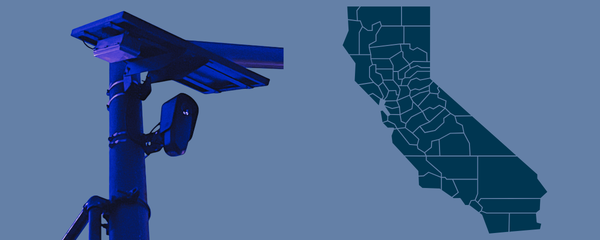
Flock Safety—a.k.a. Flock—manufactures and operates networks of automated license plate reader (ALPR) cameras. These cameras are mounted on poles throughout neighborhoods and business districts, capturing images of every vehicle that passes by, along with vehicle location and other data, using AI-powered software.
More than 200 municipal police and sheriff’s departments across California use Flock’s license plate readers, including Oakland, San Francisco, Berkeley, Mountain View, Los Gatos, El Cajon, and dozens of others across the Bay Area, Southern California, and Central Valley.
Recent investigations reveal that Flock violated state privacy protections by sharing of automated license plate reader data with
Federal agencies; and
Out-of-state police departments.
Flock Safety Lawsuit In The News
“Flock has to be beholden to the laws they claim they are trying to enforce, just like everybody else.”
—KTVU 2, Gibbs Mura partner David Berger
…A lawsuit against Flock [alleged that] federal agencies accessed data from the SFPD’s cameras more than 1.6 million times,” and “Los Altos’s readers reportedly shared information to out-of-state agencies more than a million times.
What Flock Safety is Doing with Your License Plate Data
Flock’s ALPR cameras capture comprehensive records of daily movements. Unlike traditional police investigations that target specific suspects, these systems take photos of every car that drives by, effectively creating a dragnet license plate reader surveillance system.
Flock Safety Lawsuits: Illegal Data Sharing Beyond California’s Borders
Multiple lawsuits allege that California municipalities illegally share Flock license plate reader vehicle location data with out-of-state law enforcement agencies and federal immigration authorities:
El Cajon’s Illegal Data Sharing: In October 2025, California Attorney General Rob Bonta filed a lawsuit against the City of El Cajon for systematically violating state law by sharing Flock’s ALPR data with out-of-state agencies.
Mountain View Shuts Down Entire System: Mountain View police department completely shut down its Flock camera network amid rising concerns about the company’s data privacy practices. The Mountain View police department alleges that Flock, not the department, turned on the ability for out-of-state law enforcement agencies to view the ALPR data from the department’s cameras.
Nationwide Data Concerns about License Plate Readers (LPRs): Privacy advocates and civil liberties organizations across the country, including the ACLU, have raised concerns about mass surveillance and the collection and sharing of vehicle, location, and other data in cities throughout the country. These issues include:
Uploading local ALPR data to shared law enforcement databases;
Granting blanket access to federal agencies;
Failing to comply with California’s strict data-sharing limitations; and
Ignoring state laws designed to protect immigrant communities.
Sharing Automated License Plate Reader Data with Federal Agencies, including CBP and ICE
California prohibits local law enforcement from sharing ALPR data without out of state or federal law enforcement agencies. Yet Flock Safety’s centralized database structure and data-sharing practices have allegedly violated exactly what these state laws were designed to prevent.
Public records suggest San Jose PD granted ‘side door’ access to federal agencies, based on Flock audits that show search reasons like ‘fresno dea intel’ and ‘CBP’ and ‘ICE.’
—Mercury News, 2026, San Jose latest city to face questions whether federal authorities are accessing police license plate camera data
Flock Safety and California Data Privacy Protections
California has some of the nation’s strongest privacy protections—laws specifically designed to prevent the kind of mass surveillance, location tracking, and large-scale data sharing that Flock Safety cameras enable.
These include:
No Out-of-State Data Sharing: Public agencies “shall not sell, share, or transfer ALPR information, except to another public agency” (§ 1798.90.55(b)). California law defines “public agency” as California state and local entities only—not federal agencies or out-of-state police.
Required Security Safeguards: ALPR operators must “maintain reasonable security procedures and practices, including operational, administrative, technical, and physical safeguards, to protect ALPR information from unauthorized access, destruction, use, modification, or disclosure” (§ 1798.90.51(a)).
Mandatory Privacy Policies: Operators must implement usage and privacy policies ensuring data collection and sharing “is consistent with respect for individuals’ privacy and civil liberties,” and require that data “only be used for the authorized purposes” (§§ 1798.90.51(b), 1798.90.52(b)).
Based on the alleged sharing of California residents’ license plate data with out-of-state and federal agencies in direct violation of state privacy protections, affected individuals may have legal claims enabling them to recover damages. Speak with our legal team today.
Our License Plate Reader Data Privacy Lawsuit Team
Gibbs Mura is a nationwide leader in class action lawsuits seeking to hold companies accountable for large-scale data breaches and privacy lawsuits. It has prosecuted some of the largest privacy cases throughout the country, and the firm’s attorneys have received numerous awards for their privacy and data breach work including “Cybersecurity & Privacy MVP,” “Top Cybersecurity and Privacy Attorneys Under 40,” and “Titans of the Plaintiffs Bar.”
Alana assists with various cases addressing corporate harm, including data breach, financial fraud, and overdraft fees lawsuits.
Frequently Asked Questions About Flock Safety License Plate Reader Lawsuits
Are Flock Safety license plate readers legal in California?
While Flock Safety cameras are currently used by hundreds of California cities, the manner in which the ALPR data is shared is under scrutiny. California law (Civil Code § 1798.90.55(b)) prohibits public agencies from sharing ALPR data with out-of-state or federal agencies. Operators must implement usage and privacy policies ensuring data collection and sharing “is consistent with respect for individuals’ privacy and civil liberties,” and require that data “only be used for the authorized purposes.” Recent lawsuits, including the California Attorney General’s case against El Cajon, allege that cities using Flock Safety have violated state privacy protections by illegally sharing resident data with out-of-state law enforcement and federal agencies. Our lawsuits seek to hold Flock Safety accountable for all such violations.
How do I know if my license plate was captured by Flock Safety cameras?
If you live in or frequently drive through California cities that have contracted with Flock Safety—including Oakland, San Francisco, Berkeley, Mountain View, Los Gatos, El Cajon, or over 200 other jurisdictions—your license plate has likely been photographed and information about your license plate’s location stored in their database. These solar-powered cameras operate 24/7 on poles throughout neighborhoods and business districts, capturing every passing vehicle without notification or consent.
Can Flock Safety share my license plate data with immigration enforcement?
No. California’s sanctuary state laws (SB 54) specifically prohibit sharing data with federal immigration authorities like ICE and CBP. However, investigations have revealed that Flock Safety’s centralized database structure and data-sharing practices may have created unauthorized access for federal immigration enforcement—exactly what California law was designed to prevent. This alleged illegal sharing is the basis for potential legal claims against both cities and Flock Safety.
What damages can I recover if my data was illegally shared by Flock Safety?
Under California Civil Code § 1798.90.54, individuals harmed by unauthorized access or use of ALPR information can sue both the city and Flock Safety for actual damages (minimum $2,500 per violation), punitive damages for willful violations, attorney’s fees, and court-ordered relief requiring them to stop illegal practices. You have three years from the date of violation to file a claim.
Which California cities are being investigated for illegal Flock Safety data sharing?
Flock Safety has deployed its license plate reader cameras in hundreds of California cities, creating a centralized database that may have enabled unauthorized access by out-of-state and federal agencies. California Attorney General Rob Bonta sued El Cajon after discovering that Flock’s system facilitated data sharing with agencies in hundreds of jurisdictions. Mountain View shut down its entire Flock camera network over concerns about the company’s data privacy practices. Our investigation focuses on Flock Safety’s role in potential privacy violations across all California cities where its cameras operate, including Oakland, San Francisco, Berkeley, Los Gatos, Piedmont, San Leandro, Alameda, Fremont, and dozens of others across the Bay Area, Southern California, and Central Valley.